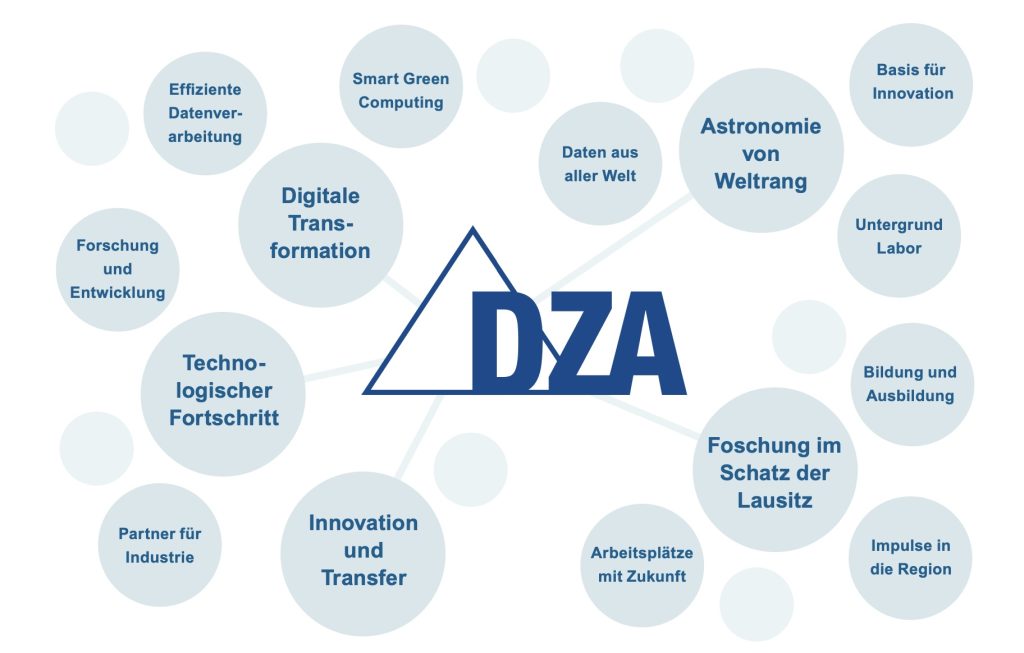


The German Center for Astrophysics (Deutsches Zentrum für Astrophysik, or DZA) is a large-scale research center with a forward-looking scientific program, a center for digitization that brings together data streams from astronomical observatories around the globe. The use of the latest technologies is crucial for the work of the DZA to work closely with industry and existing technology centers in Saxony, but also worldwide.
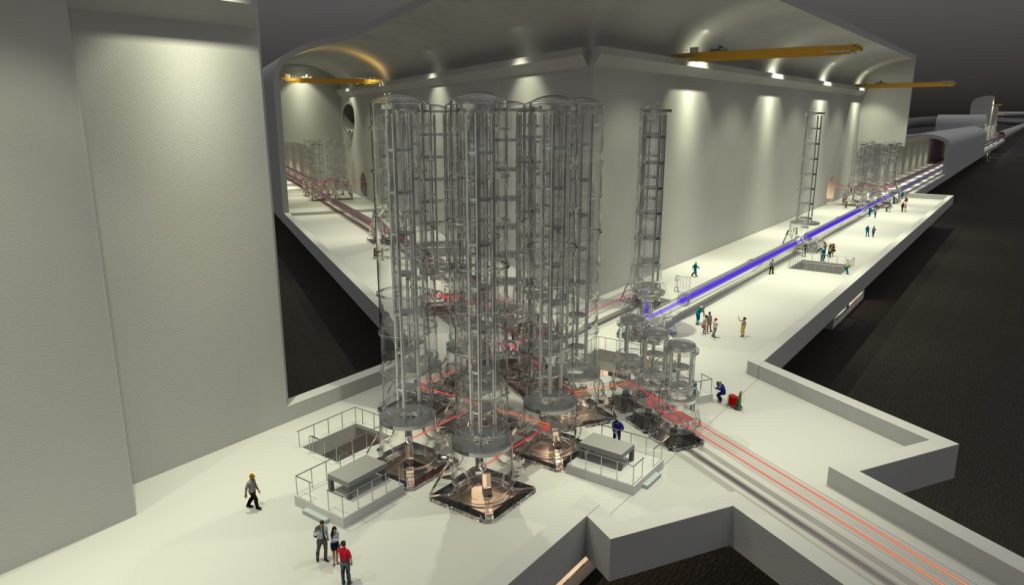
In addition, research is being conducted in the granite of Lusatia, a place of great seismological tranquility. An underground research laboratory is to be established, the Low Seismic Lab. Therefore, the first drillings were carried out in a small community – in Ralbitz-Rosenthal – in the middle of Lusatia. The region’s nature may therefore possibly factor into the location of the Einstein telescope. This would be the ideal complement for the DZA and again an enormous economic impulse for the region.
Many examples show – astronomical research changes regions sustainably. The DZA will also act as a job engine. The DZA’s unique combination of research and development in IT, sensor technology, and materials research coupled with its need for manufacturing facilities will provide economic impetus and create at least 3,000 sustainable jobs. The employment portfolio is diverse; jobs will be created in scientific as well as non-scientific areas. We are talking about technology, construction, material processing, electronics, measurement, mechanical engineering, accounting, purchasing and administration.
With the DZA, there will be a magnet for industry and institutions in Upper Lusatia, which will support start-ups and the creation of new spin-off companies. Another important focus is education: daycare centers, schools, vocational training or university studies form the ideal basis for creating prospects for people in the region. The DZA works in broad-based networks. There is no need to first build up national and international networks, they already exist and will enrich the region in the future.
| 2 locations: DZA Institute in Görlitz and underground laboratory in the municipality of Ralbitz-Rosenthal (approx. 15 km away from Hoyerswerda) |
| Creation of more than 350 scientific, 350 technical, 200 administrative and 100 training positions directly at the DZA |
| Vocational training starting from kindergarten |
| International Astrophysics Data Center |
| Low Seismic Lab: underground laboratory 200 meters deep in Lusatian granite |
| Possible location for the Einstein telescope |
| The DZA is a joint initiative of German astronomy and Astroparticle physics. |
| Numerous strong partners from the field of science, industry, politics and society support the project. |
More at https://www.deutscheszentrumastrophysik.de/de